Pre Build and Store: A Smarter Approach to Schedule Protection and Trade Coordination

In custom fabrication, the standard workflow puts millwork and metalwork as one of the final steps in the construction process. Fabrication begins when structural framing, rough-ins, and plaster are complete. For straightforward scopes, that sequence works. For some high-complexity projects, it can concentrate the most demanding work into the narrowest window at the end of a build, which is exactly when every other trade is also trying to close out.
Pre Build and Store (PB&S) is McKenzie Craft's approach to changing that equation for the right scopes. We begin fabrication earlier, hold completed product in our shop, and deliver when the site is ready. The result is a custom fabrication scope that no longer depends on a perfect site timeline, and a project team that gains real flexibility when the schedule shifts. Think of it less like running faster to reach the finish line and more like leaving earlier. The destination is the same. The experience of getting there is completely different.
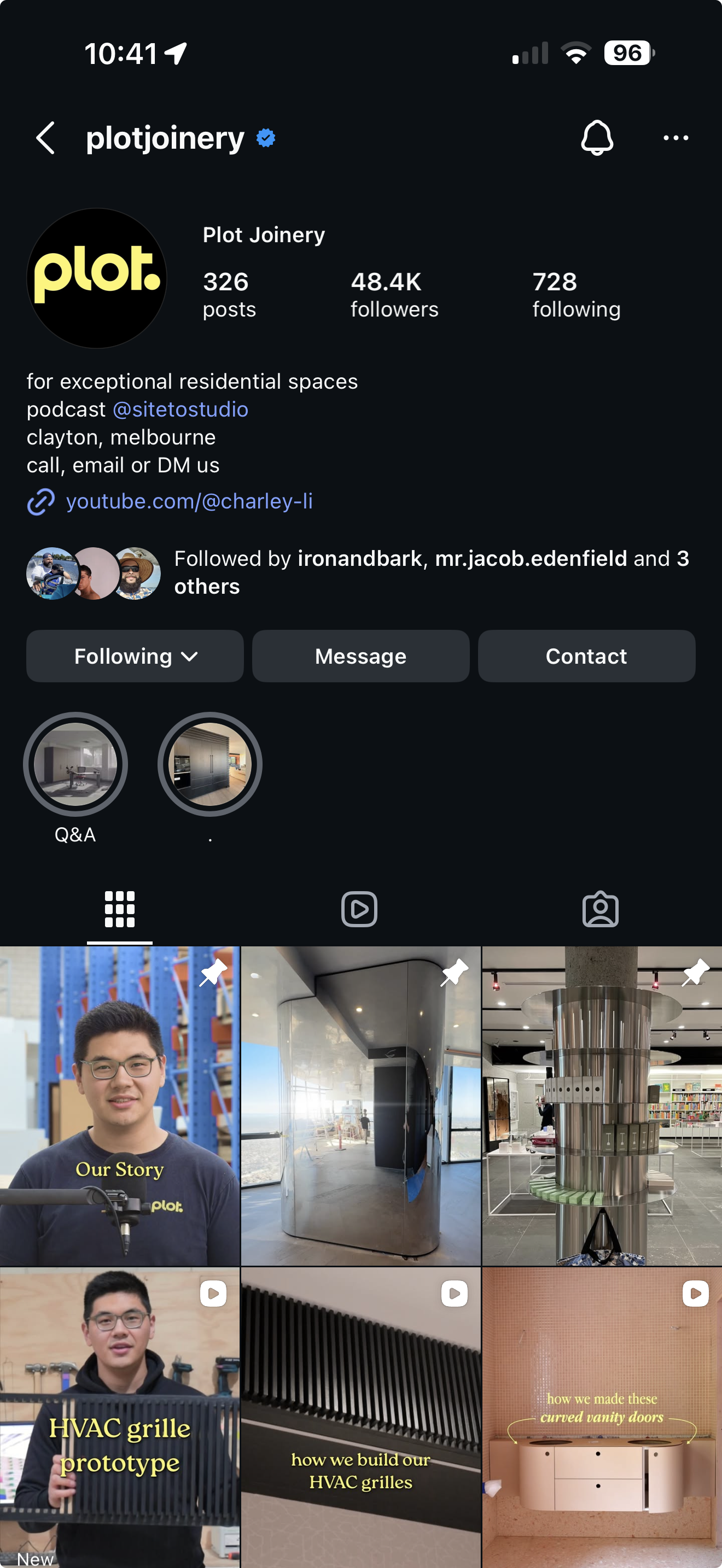
To examine how this protocol benefits the project team, we collaborated with Charley Li, owner of Australia-based Plot Joinery and Site to Studio Podcast, whose firm specializes in high-complexity custom fabrication for architects and builders on exceptional residential and commercial projects.

Preserving the Production Window When Schedules Shift
Construction schedules rarely finish the way they start. When a site falls behind, every trade downstream absorbs the impact. For the general contractor, that typically means compressing the finish sequence, making costly last-minute decisions, and managing a close-out that is more stressful than it needs to be. The custom fabrication scope, which carries the longest lead time and the least tolerance for error, is usually the one that takes the hardest hit.
When product is pre-built and in storage, that pressure has nowhere to land. Re-sequencing the installation requires far less coordination from the general contractor. A custom scope that would normally carry a six-to-eight week lead time at the end of a build becomes, effectively, a ready item. The site catches up to the product rather than the other way around.
"If we follow the construction schedule with just-in-time manufacturing and the site deviates, our typical fabrication lead time may not allow us to re-sequence in time," Li notes. "But if the product is pre-built and in storage, re-sequencing installation is far easier and requires less planning from the general contractor."
For the GC, that means fewer calls, fewer decisions under pressure, and a finish sequence that can flex without pulling the entire schedule into question.

Production Floor | McKenzie Craft Workshop
Elevated Shop Drawings as a Coordination Tool
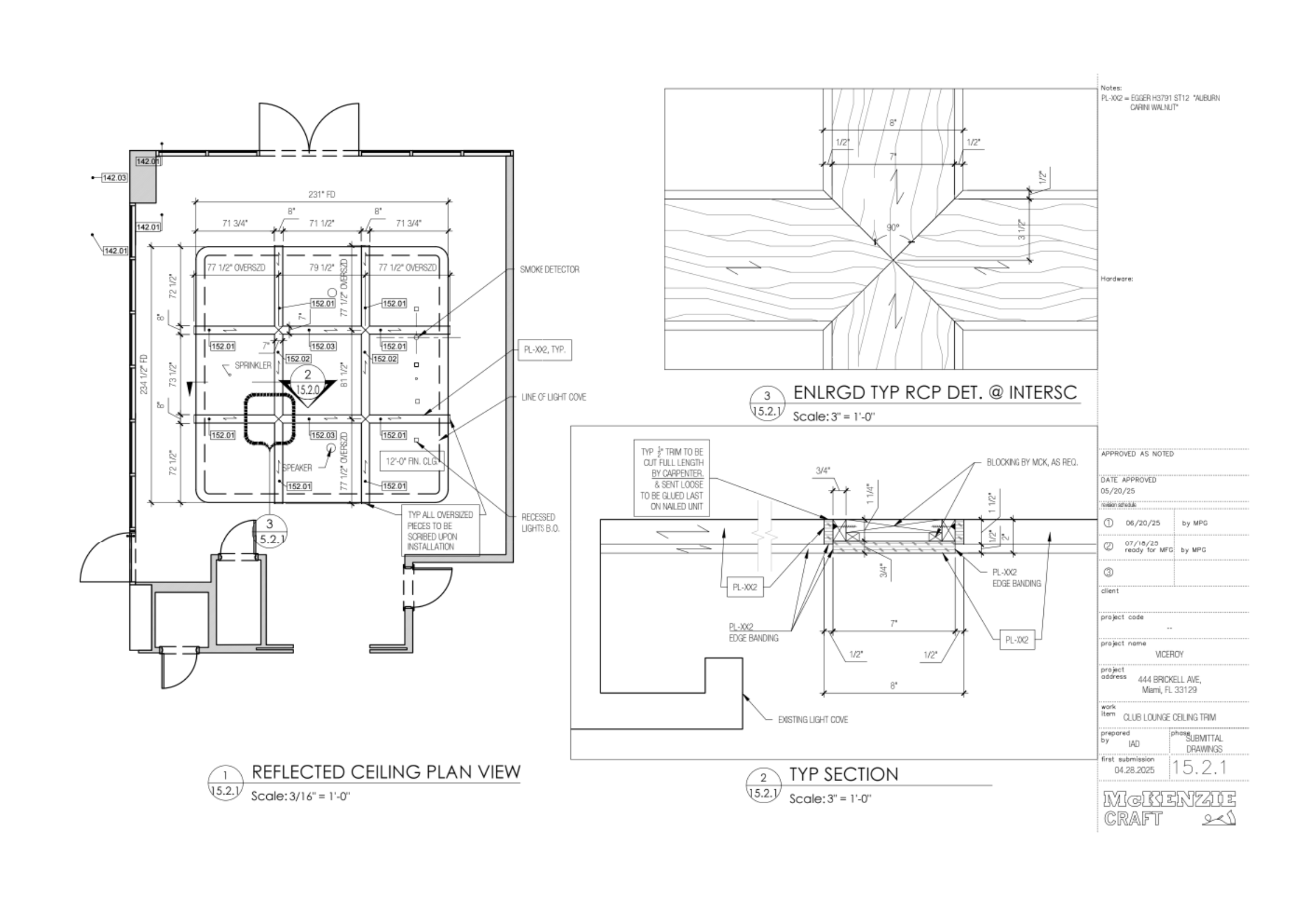
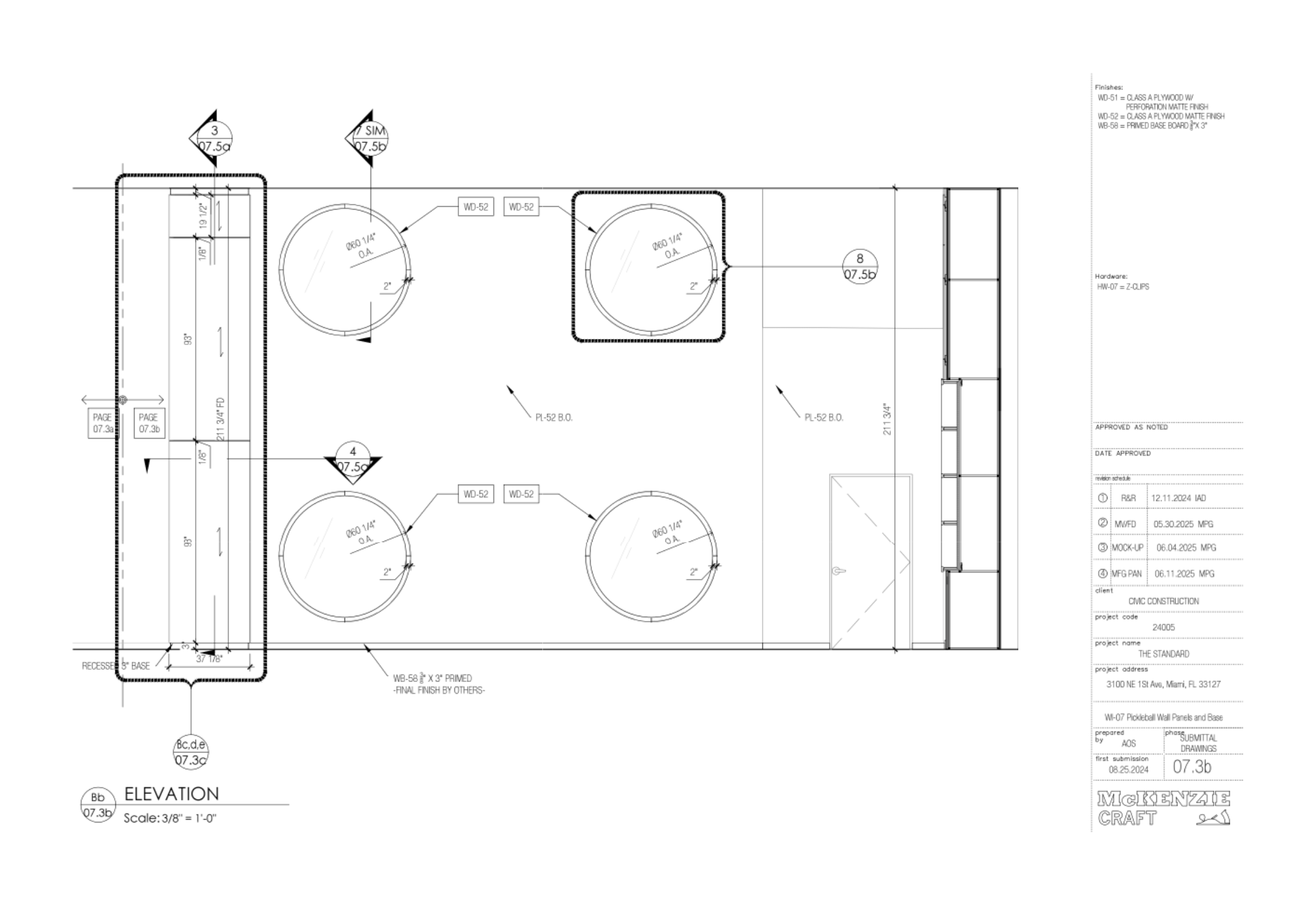
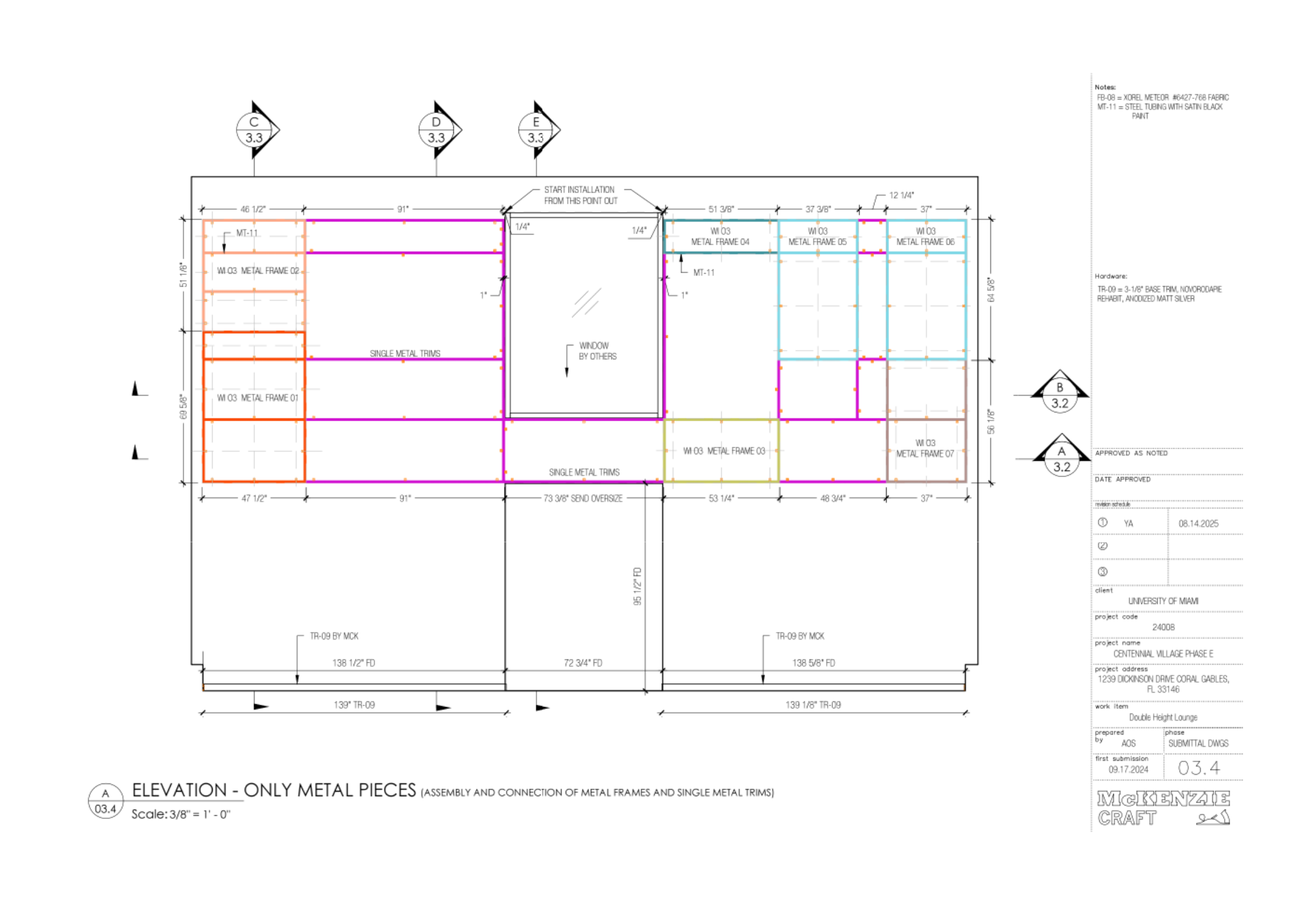
PB&S requires a more complete, more coordinated shop drawing package than a standard fabrication engagement. Because production begins earlier, the drawings need to capture full coordination detail before any material moves. That standard is not a constraint. It is the mechanism through which the rest of the project benefits.
When millwork shop drawings are produced early and at full coordination quality, they can become a reference document for every trade touching that space. MEP rough-ins can be laid out from the drawings rather than worked around existing conditions. Clashes with structural elements surface before they become field rework. Stone fabrication can begin nesting diagrams early. The GC has a clear, shared scope to manage other trades from. The entire process of surfacing and resolving design decisions moves upstream, where changes are faster and cheaper to resolve.
In practice, this means the millwork details drive MEP coordination rather than the millwork adapting to whatever was already set in the field. That is a meaningful shift in how risk gets distributed across the project. The typical millwork buyout sequence doesn't allow enough time for MEP trades to coordinate stub-out locations against approved shop drawings. Designers and architects often fine-tune millwork during the submittal phase, which relocates MEP rough-ins and sends those trades back to rework their locations. That burden lands on the GC to coordinate and execute before walls close. When it doesn't get resolved in time, the rework that follows carries real cost and schedule consequences.
"Early shop drawings give more time for the maker to express their understanding of the design intent, and for the architect to verify that understanding," Li explains. "The absence of time pressure frees them from the inconvenience of causing delays. Ultimately, there is less compromise in the design outcome and more certainty in the built outcome."
For the builder, the same logic applies directly to risk management. "Early shop drawings are an opportunity for the maker to surface risks early. And the earlier a risk is surfaced, the cheaper it is to fix."
We Take on the Dimensional Risk
General contractors operate in a world of risk management. Everything they agree to is weighed against what it might cost them if something goes wrong. Holding to dimensions on a pre-built scope is exactly the kind of commitment that makes a GC pause. If the site shifts, who is responsible? That question is often enough to slow the conversation down or stop it entirely.
McKenzie Craft removes that variable. The responsibility for hold-to stays with us, not the field.
We assess the scope area by area, identifying where dimensions can be controlled and where conditions are less predictable. For areas with controlled dimensions, we fabricate to those dimensions. For higher-risk areas, we work with the builder to determine the best mitigation approach. "On higher risk areas, we see if we can help mitigate that risk through project management tactics," Li explains, "for example providing a setout template which can be screwed down to the floor or back onto the wall, or by taking on slightly more in the scope so we can control the outcome." If controlling the outcome requires us to build out the surrounding structure, we do it.
With McKenzie Craft's dedicated project management and field team handling coordination, tracking, and dimensional accountability, the GC is not taking on more work. In most cases, they are taking on less. The front-end investment in early engagement is an insurance policy against the costly changes, compressed timelines, and field problem-solving that tend to define the final weeks of a complex build. By the time the install window arrives, the hard decisions are already made. The product is ready. The reference points are set. The project moves.
It is also not an all-or-nothing decision. For a large wall panel scope, McKenzie Craft can pre-build the primary panel run and hold back a portion of the scope where site conditions are less certain. The bulk of the work is completed and stored. The variable portion stays flexible. The project captures most of the benefit of PB&S without carrying dimensional risk on the areas where it is not yet warranted. That kind of partial approach is often the most practical entry point for teams new to the protocol. Lock down what can be locked down. Leave room where the scope needs it.
“...the single biggest constraint we face is getting to a clear production scope with enough time to build it...”
Who Is This For?
PB&S is best suited for projects where the custom fabrication scope is large, complex, or both. Hospitality builds, high-end residential, and commercial interiors with significant millwork or metalwork are the environments where the protocol delivers the most value. These are the scopes where a compressed finish window is most costly and where early coordination has the most trades to benefit.
For general contractors managing complex millwork and metalwork scopes, the window between award and install is the most valuable resource on the project. PB&S is a way to use that window deliberately, front-loading the coordination and fabrication work so the back end of the build has room to breathe.
The benefits compound as the project progresses. Early shop drawings give every trade a clearer scope to work from. Fabrication completed ahead of schedule means installation can flex around site conditions rather than fight them. And with McKenzie Craft's project management team carrying the coordination burden, the GC gains a reliable, accountable partner on the scope that typically carries the most end-of-project risk.
"People in our industry would do well to understand that the single biggest constraint we face is getting to a clear production scope with enough time to build it," Li says. "Shop drawings approved six months before site measure. PB&S is far downstream from that."
The finish line does not move. But how you get there does.
If you haven’t yet, be sure to check out Charley Li’s socials, @plotjoinery and @sitetostudio for informative millwork and design content including this sit down interview with Marc Sanderson, CEO of Innergy.